
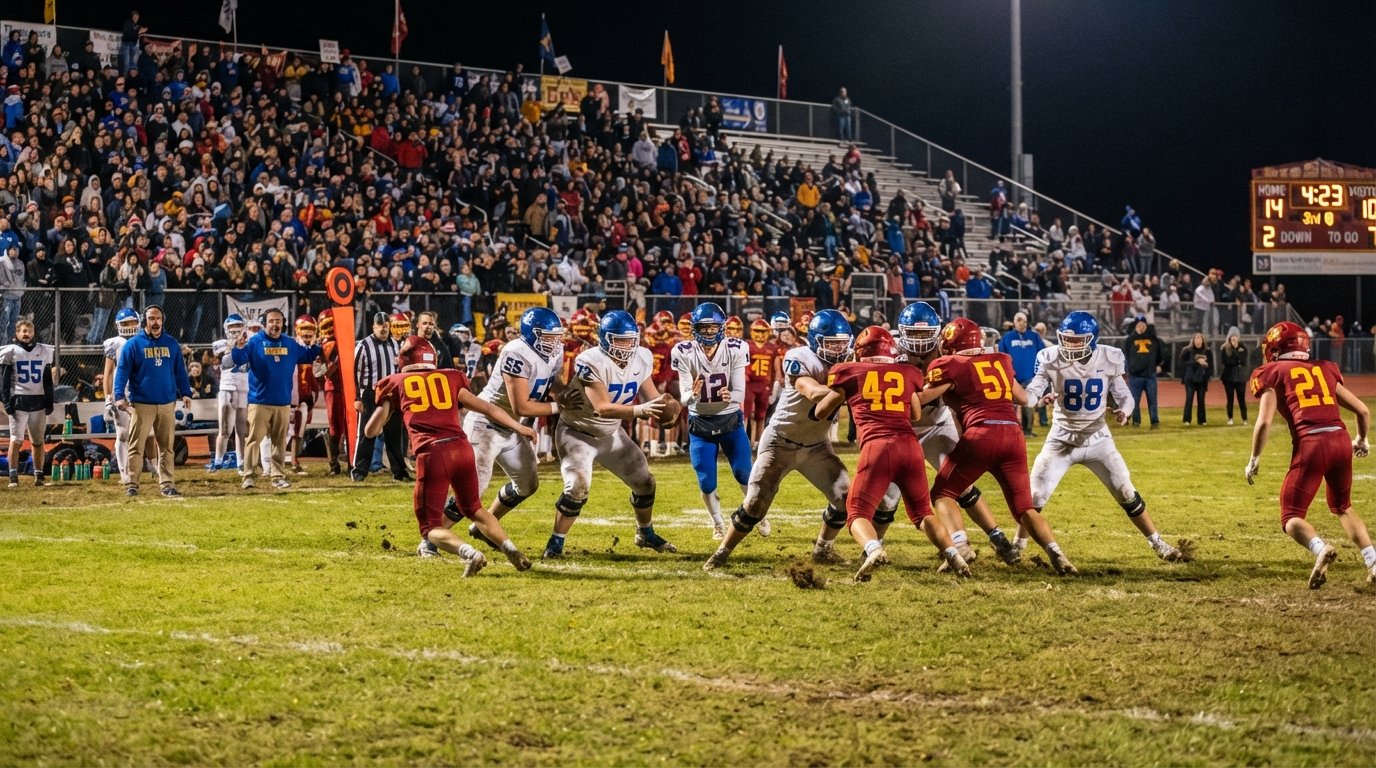
If you’re looking for a straight answer, here it is: according to the National Federation of State High School Associations (NFHS), 1,081,241 students participated in high school football in the United States during the 2025–26 school year. That number covers traditional tackle football across all formats — 6-player, 8-player, 9-player, and 11-player — and it does not include the separately counted category of flag football. So when people ask how many kids play high school football in the US, that’s the most current, verified answer available.
And honestly, crossing the one million mark is significant. High school football has faced real headwinds over the past decade or so, and the fact that participation has now grown for multiple consecutive years is worth paying attention to — even if the full picture is more complicated than a single number can tell you.
Here’s what that number actually means, where it comes from, and why it matters for parents, coaches, and anyone trying to understand the state of the sport right now.
Where the High School Football Participation Numbers Come From
The NFHS has conducted its High School Athletics Participation Survey every year since 1971. It’s the most widely cited source for national high school sports data in the country, and it pulls information directly from member state associations — not from individual schools or players. That’s an important distinction.
These figures are participation entries, not a unique head count of every individual student who played football in America. A student who participates in both a fall football program and a spring football program at the same school, for example, could potentially be counted more than once depending on how a state association reports its data. The NFHS is transparent about this methodology, and readers should keep it in mind before treating the national total as an exact census of individual children.
That said, the survey is comprehensive and consistent. It’s the best national data available, and it’s been tracking trends in high school sports for over 50 years. No other organization comes close to matching its scope.
How Many High School Football Players Are in the US Right Now
The headline number for 2025–26 is 1,081,241 participants in traditional high school football. But it’s worth breaking that down a little further, because not all high school football looks the same.
The overwhelming majority of those students — 1,043,716 — play 11-player football, the full-contact, full-field version most people picture when they think of high school football on a Friday night. That makes 11-player football the most participated sport among boys in the entire NFHS survey, not just the most popular football format.
The remaining participants are spread across smaller formats: 6-player, 8-player, and 9-player football. These variations are most common in rural states and smaller school districts where not enough students are available to field a full 11-man roster. Schools in states like Texas, Montana, and Nebraska have long used these smaller formats to keep football programs alive in communities that might otherwise lose the sport entirely. They’re genuine, organized tackle football — just played with fewer players on each side.
Is High School Football Participation Increasing or Decreasing?
Right now, it’s increasing. The 2025–26 total of 1,081,241 represents a gain of 11,597 participants over the previous year’s numbers, according to the NFHS. That’s the kind of steady, meaningful growth that suggests the sport is stabilizing after a difficult stretch.
Football participation had been declining for several years heading into the early 2020s. The COVID-19 pandemic disrupted the 2020–21 school year significantly — some states moved their seasons, others cancelled them — and overall participation numbers dipped during that period. The recovery since then has been gradual but real.
The NFHS reported that overall high school sports participation in 2025–26 reached 8,415,684 participation entries — an all-time record in the history of the survey. Football’s growth is happening inside a broader environment where high school athletics as a whole is expanding. That context matters. Football isn’t growing in isolation; it’s part of a larger surge in student-athlete participation across dozens of sports.
One important caveat: participation totals can and do change each year when the NFHS releases updated survey results. If you’re reading this article some time after its publication, it’s worth checking the NFHS participation survey archive directly at nfhs.org to see whether newer data has been released.
Traditional Football vs. Flag Football: Don’t Mix Up the Numbers
This is where things get a little complicated, and it’s worth slowing down for a moment because the confusion is easy to make.
The 1,081,241 figure covers traditional tackle football only. Flag football — which is a non-contact version of the sport that has grown rapidly in American high schools, particularly among girls — is counted separately by the NFHS and is not included in that total.
Girls flag football has been one of the fastest-growing high school sports in recent years. The NFHS even highlighted it specifically in its 2025–26 participation release, noting that girls flag football and girls wrestling led the latest round of participation increases. Several states have formally sanctioned girls flag football as an official high school sport, and the number of programs continues to grow year over year.
So if you’re trying to understand how many students play some form of football at the high school level in America — tackle and flag combined — the true number is larger than 1,081,241. But those are two distinct categories of sport with different rules, equipment, and governing structures. Combining them without explaining the difference would be misleading, which is why the NFHS tracks them separately and why this article does the same.
Why 11-Player Football Remains the Dominant Format
It’s not a close race. Of all the traditional football formats played in American high schools, 11-player football accounts for roughly 96 percent of total participation. The format is deeply embedded in how American communities experience Friday night football — the full-size field, the marching band, the packed bleachers, the whole thing.
Anyone who’s sat in the stands at a packed high school stadium on a cool October night understands the hold this version of the sport has on communities large and small. That cultural weight has a lot to do with why 11-player football’s numbers remain so much higher than any other format, even as smaller-sided versions serve important roles in keeping the sport alive across rural America.
The smaller formats — 6-man, 8-man, and 9-man football — are genuinely competitive and well-organized. But they serve a different purpose: keeping football accessible in places where population alone would otherwise make a full 11-player program unsustainable. Think of them as regional solutions to a national sport.
High School Football Statistics USA: Putting the Numbers in Context
Over a million students participating in tackle football at the high school level is a big number. To put it in perspective, the next most-participated high school sports — typically track and field and basketball — also draw large numbers, but football’s combination of roster sizes and widespread program availability makes it one of the defining sports of American secondary education.
And the NFHS survey data goes back more than five decades, which means researchers, administrators, and journalists have a long baseline to compare against. The current recovery in football participation is real and measurable — not just a feeling or an impression. The numbers back it up.
But it’s also fair to say the sport has work to do. Participation hasn’t returned to its all-time peaks from the mid-2000s and early 2010s, when total football participants regularly exceeded 1.1 million. Whether it gets back to those levels — or whether flag football eventually reshapes what “playing high school football” looks like nationwide — remains an open question. The trends are worth watching.
Frequently Asked Questions
How many students play high school football in the United States?
According to the NFHS, 1,081,241 students participated in traditional high school football during the 2025–26 school year. That includes 6-player, 8-player, 9-player, and 11-player tackle football combined. This figure does not include flag football, which is counted separately. Participation numbers are updated annually when the NFHS releases its High School Athletics Participation Survey results.
Does the NFHS football participation count include flag football?
No. The NFHS counts traditional tackle football and flag football as separate categories. The 1,081,241 figure for 2025–26 covers tackle formats only. Girls flag football participation is tracked and reported independently. If you’re looking at total football participation across both tackle and flag formats, the actual number of students involved in some form of high school football is higher than what the traditional count reflects.
Is high school football participation growing or shrinking?
It’s growing. The 2025–26 total increased by 11,597 participants compared to the prior year, continuing a multi-year rebound after pandemic-era declines. High school sports participation overall reached a record high of 8,415,684 entries in 2025–26, according to the NFHS, so football’s growth is happening alongside broader gains across high school athletics nationwide.
What is the most popular format of high school football?
11-player football is by far the most common format, with 1,043,716 participants in 2025–26. That makes it the most-participated sport among boys in the entire NFHS survey. Smaller formats like 6-man, 8-man, and 9-man football also exist and are particularly common in rural areas where schools don’t have enough students to field a full 11-player roster.
Are NFHS participation numbers the same as a count of every individual football player in America?
Not exactly. NFHS figures are participation entries reported through member state associations, not a confirmed unique-student headcount. A student counted in more than one program within a reporting period could potentially appear more than once, depending on state methodology. The NFHS data is the most comprehensive national source available, but readers should understand it as reported participation rather than a precise census of every individual athlete.
FAQ Schema Recommendation: Mark this FAQ section up with FAQ Schema (JSON-LD) to improve eligibility for Google FAQ rich results.
Closing Thought
More than a million kids lacing up for tackle football every year is a reminder that despite everything — the debates, the concerns, the shifting sports landscape — high school football still runs deep in American communities. The numbers tell that story clearly, and right now, they’re pointing in a direction coaches and fans haven’t seen in a while: up. Keep an eye on the NFHS survey each year, because how many kids play high school football in the US is a question with an answer that keeps evolving.