
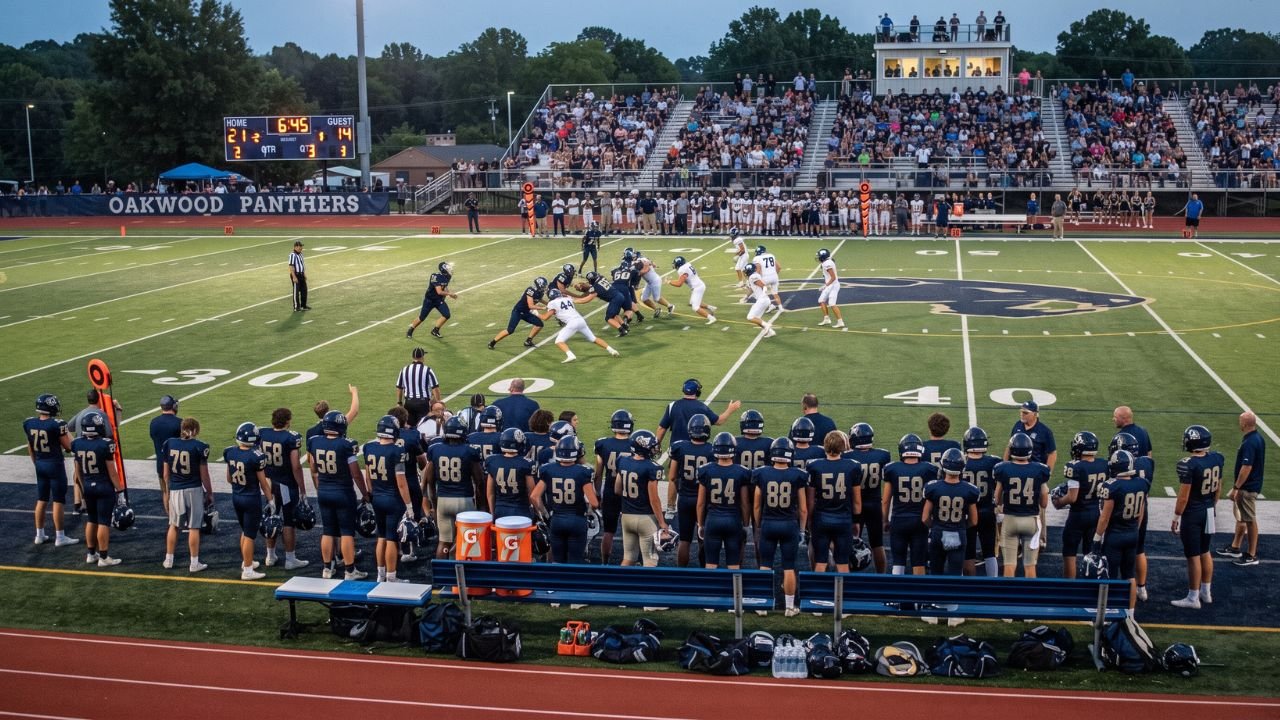
Every Friday night, two teams take the field with 11 players each lined up and ready to go. But walk behind the bench and you’ll see dozens more—backup quarterbacks, reserve linemen, specialists—all part of the same team. So when someone asks how many players are on a high school football team, the answer actually depends on which question they’re really asking.
The rules are clear on one thing: in standard high school football, each team has 11 players on the field at a time during a play. That number is set by the National Federation of State High School Associations (NFHS), which governs high school sports rules across most of the country. But the total number of players who make up a complete team roster—everyone from starters to backups to practice-squad players—is a different number entirely, and it’s not set by one universal national rule.
This article breaks down both questions clearly, explains how rosters actually work at the high school level, covers alternative football formats, and gives you the national participation numbers that show just how big this sport really is.
11 Players on the Field — That Part Is Simple
Under NFHS football rules, a team must have exactly 11 players on the field when a play begins. Not 10, not 12—11. That’s the foundation of the standard game, and it applies at every level of 11-player high school football across the country.
Those 11 players on offense cover specific positions: a quarterback, running backs, wide receivers, tight ends, and an offensive line. On defense, teams line up with their own combination of linemen, linebackers, and defensive backs. Special teams—kickers, punters, return specialists—also take the field in groups of 11 during kicks and punts.
Having too many players on the field at once isn’t just a coaching mistake—it’s a penalty. Too few, and a team is simply at a disadvantage. The 11-player format isn’t just tradition; it’s a rule written into the NFHS football rulebook.
The Full Roster Is a Different Story
Here’s where a lot of people get confused. Eleven players on the field doesn’t mean only 11 players are on the team.
A high school football team’s full roster—meaning everyone who suits up, practices, and participates in the program—is typically much larger. Programs regularly carry dozens of players between varsity, junior varsity, and freshman squads. On any given Friday night, a school might have 80 or more students involved in the football program across all levels. Some smaller schools operate with far fewer.
But here’s the honest answer: there is no single nationwide roster-size limit for high school football. The NFHS establishes how many players participate on the field during a game, but it does not mandate one universal cap on the total number of players a school can put on its roster. That side of things is generally left to individual state athletic associations, school districts, and the programs themselves.
That means a large public high school in Texas might carry a significantly bigger roster than a small rural school in Montana—and both are doing things correctly under their local rules. If you need to know the specific roster limit that applies to a particular school or program, the right place to check is that school’s athletic department or the applicable state athletic association.
Starters, Substitutes, and the Players Behind Them
Understanding a football roster means understanding how the game is actually played. Only 11 players from each team are on the field for any given play, but substitutions happen constantly throughout a game.
Starters are the players who begin each phase of the game—offense, defense, and special teams. Behind every starter, there’s typically at least one backup who trains to play the same position. If a starter gets injured, draws a penalty, or needs a rest, a substitute comes in to replace them.
Beyond starters and direct backups, many programs carry additional players who see limited action in games but practice every day and contribute to the team’s development. Freshmen and junior varsity players often get a chance to develop before they’re ready for varsity action.
None of this changes the 11-player rule. Substitutes must check in properly and the game never has more than 11 from each side on the field. But it does explain why a high school football team’s total roster is almost always far larger than 11—or even 22—players.
Not All High School Football Is 11-Player
The 11-player format gets the most attention because it’s by far the most common, but it’s not the only version of high school football recognized under NFHS rules.
Smaller schools—particularly those in rural areas that don’t have enough students to field a full 11-player team—often compete in alternative formats. The NFHS recognizes nine-player, eight-player, and six-player football as official formats. The number of players on the field changes depending on which format is used, and the rules are adjusted accordingly.
Six-player football, for example, places six players from each team on the field during a play. Eight-player and nine-player formats fall between six-player and the standard 11-player game. These smaller formats allow schools with limited enrollment to still offer football to their students rather than dropping the sport altogether.
Just like the 11-player game, the total roster size for a six-, eight-, or nine-player program isn’t set by a single national rule. It depends on the school’s specific situation, the state association’s policies, and the number of students who turn out for the program.
For current information on which formats are available in a specific state, check with that state’s high school athletic association directly.
How Many Students Play High School Football Nationwide?
Football is one of the largest participation sports in American high schools, and the numbers back that up.
According to the NFHS 2024-25 High School Athletics Participation Survey, 1,029,588 boys participated in 11-player football during the 2024-25 school year. That makes 11-player football one of the most popular high school sports in the country by participation numbers.
When you add in all football formats—11-player, nine-player, eight-player, six-player, and flag football—the NFHS reported a combined total of 1,139,326 participants across the United States in 2024-25. The NFHS has noted that high school football continues to rebound from a pre-pandemic decline, which those numbers reflect.
Those figures represent students across thousands of high school programs—from large metro schools with 100-player rosters to six-player teams competing across wide-open stretches of the Great Plains.
Why Roster Size Varies So Much Between Schools
A few factors shape how many players end up on a high school football team in any given year.
School enrollment is the most obvious one. A high school with 3,000 students simply has a larger pool of potential players than a school with 300. Larger schools in bigger athletic classifications tend to carry more players, while smaller schools—especially those competing in six- or eight-player football—may dress out a fraction of that number.
State and local policies also matter. Some state associations set guidelines around how many players can travel to away games or dress for competition. Others leave those decisions to the school or district level. Coaching staffs, budget constraints, and facility size can all play a role too.
Program structure is another variable. A school that runs separate freshman, JV, and varsity programs may list those players on separate rosters. Another school might combine all levels under one umbrella count. How you define “the team” can change the number significantly.
The bottom line: if you’re looking for a specific school’s roster limit, go straight to that school’s athletic director or the relevant state athletic association. There’s no shortcut to a single national number because that number doesn’t exist.
What This Means for Players and Families
If your student is thinking about joining a high school football program, roster size is worth understanding—but it probably won’t be the deciding factor. Most programs welcome players who are willing to put in the work, regardless of experience level.
Freshmen typically start on a freshman or JV squad before earning varsity playing time. Getting on the field consistently as a starter takes development, and that process can take time. Some players spend their entire high school career as backups and still find real value in the experience—learning discipline, teamwork, and the physical demands of the sport.
For families trying to understand whether a school has tryouts, roster limits, or cuts, those questions are best answered by the head coach or athletic department before the season begins. Policies vary, and some programs have open rosters while others have limited spots available.
And for students interested in the smaller football formats—six-, eight-, or nine-player—those programs are legitimate, competitive, and recognized under the same NFHS rules framework. The game is smaller in scale but not in effort or commitment.
Frequently Asked Questions
How many players are on the field during a high school football game?
In standard 11-player high school football, each team has 11 players on the field during any given play. That rule is established by the NFHS and applies uniformly to the 11-player format. Alternative formats—six-, eight-, and nine-player football—use fewer players on the field, with the rules adjusted to match each format.
Does every high school football team have the same number of players on its roster?
No. There is no single national rule that sets one universal roster size for every high school football program. Total roster size varies by school enrollment, state athletic association policies, program structure, and local rules. A large school might carry significantly more players than a small rural program. Check with the specific school’s athletic department or state association for accurate numbers.
What is the difference between starters and the full team roster?
Starters are the 11 players from each team who begin a given play on offense, defense, or special teams. The full roster includes starters, substitute players, backups, and all other players who belong to the program. Substitutions are allowed throughout the game, so a roster always includes more than 11 players—even though only 11 are on the field at once.
What is six-player high school football?
Six-player football is a recognized alternative format under NFHS rules, typically used by smaller schools that don’t have enough students for a full 11-player team. Each team fields six players instead of 11, and the rules are adjusted accordingly. Eight-player and nine-player formats also exist for similar reasons. These formats give smaller schools the ability to keep football as part of their athletic program.
How many students play high school football in the United States?
According to the NFHS 2024-25 High School Athletics Participation Survey, 1,029,588 boys participated in 11-player football during the 2024-25 school year. Across all football formats combined—including six-, eight-, nine-player, and flag football—the NFHS reported 1,139,326 total participants. Those figures make football one of the largest participation sports in American high schools.
FAQ Schema Recommendation: Mark this FAQ section up with FAQPage structured data (schema.org/FAQPage) where eligible and supported by current Google guidelines. Note that Google does not guarantee FAQ rich results will display for every page.
The 11-player rule tells you exactly how many players take the field on each snap. The full roster is a separate question—one with a different answer at every school. If you’re trying to find a specific number for a specific program, the athletic department and your state’s high school athletic association are your best sources. The rules and participation numbers are national; the roster details are local.